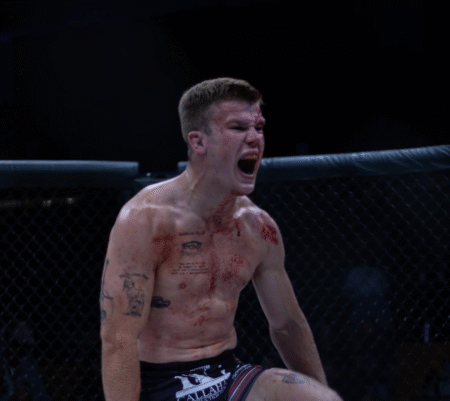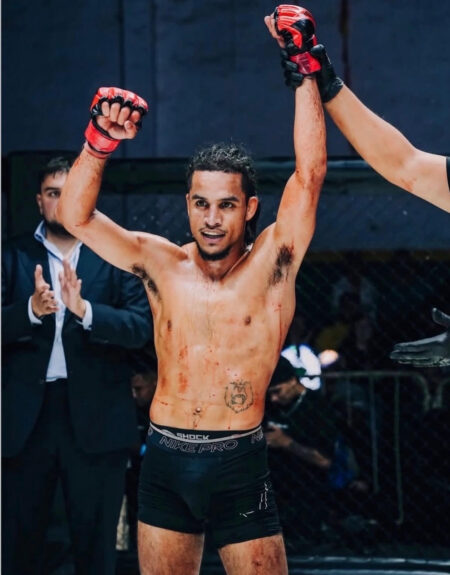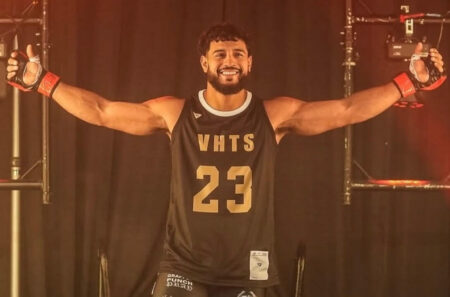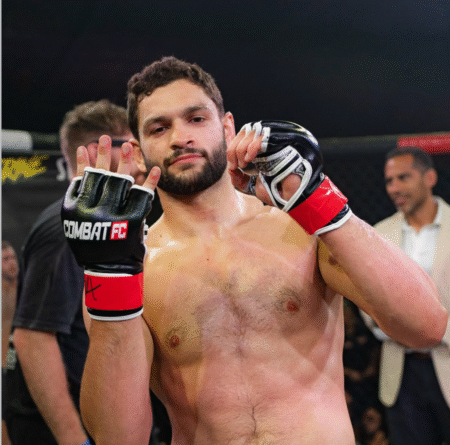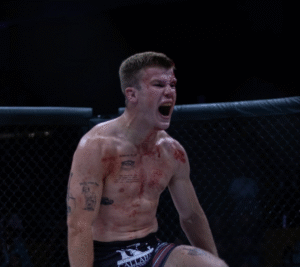




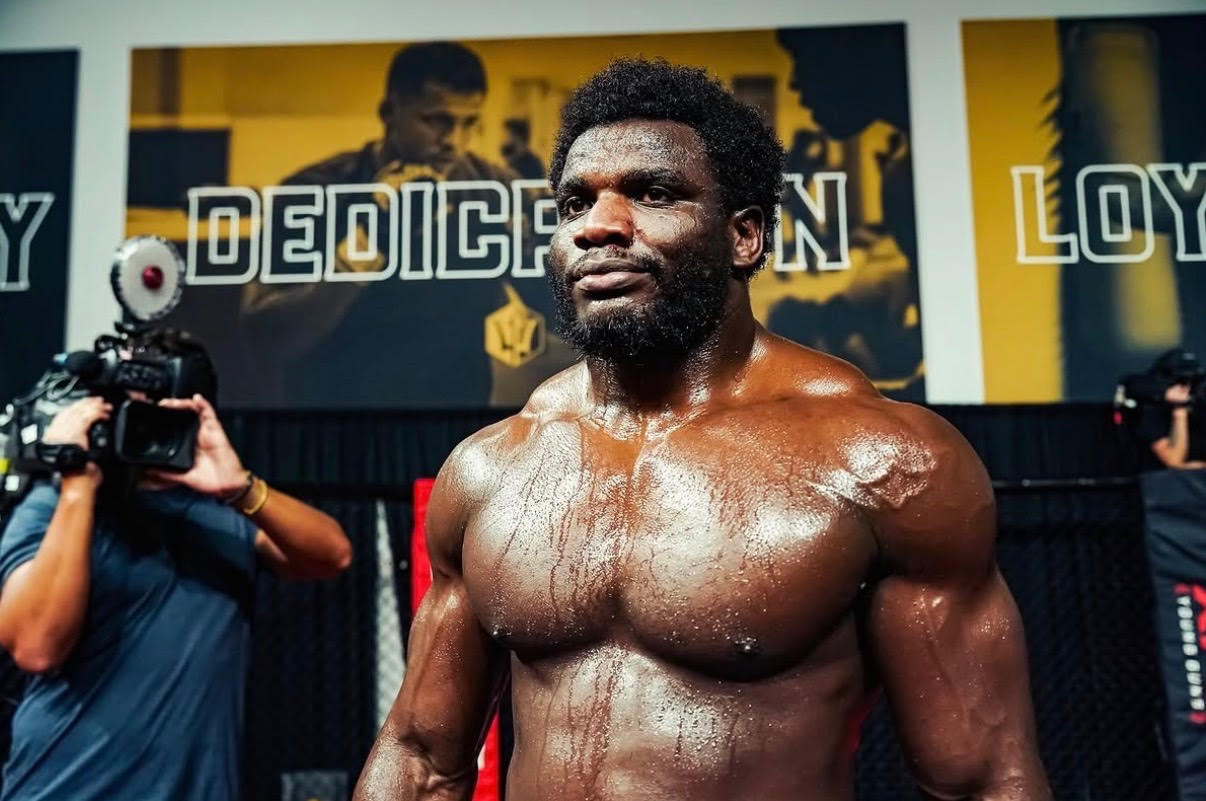
Color me surprised, but for this week’s article, we have yet another Fury FC and/or Kill Cliff fighter to take a glance at. Fury FC, CFFC, and Kill Cliff cannot be given enough kudos in my opinion. Yet Anthony Wint, who will be covering for this piece, is no ordinary fighter. We have barely scratched the surface of what professional athletes in other sports can accomplish in the cage, perhaps because not many of them make the transition. After all, it might not be worth it to some folks to pursue such a dangerous endeavor when compared to the salary one might receive in the NFL. The point being, we have seen what the raw athleticism of wrestlers and American football players can accomplish in the octagon. Look at Josh Hokit, who was in the NFL just a few short years ago.
At about six feet tall and on the lighter side of heavyweight, Wint looks like he stepped out of an Avengers comic book. A former NFL running back, he possesses speed and agility that allows him to dance circles around most heavyweights. His lower center of gravity and build make him exceptionally dangerous at closer ranges. Paired with wrestling from a young age, it’s the perfect combination. Provided he plays to his strengths, Wint can make real waves in the UFC, and with an undefeated 6-0 record, along with five finishes, he has the tools to get the job done. Fury FC’s heavyweight champion makes his debut on Dana White’s Contender Series this August, and the following attributes are what I believe will lead to him getting his hand raised yet again.
It is no secret that the heavyweight division is often criticized as having lower levels of skill. After all, who needs mental gymnastics when you have the power to put anyone to sleep? This school of thought thankfully does not apply to Wint, who emphasizes film study as one of his greatest strengths. Self-described as cerebral, it is very apparent in the way he fights. Wint steps on the gas as soon as the opening bell rings, immediately putting pressure on his opponent so he can get inside and do his best work. Wint has even stated that he prefers the taller opponents. Rather than intimidate him, their long frame allows him to crowd them adequately, should he be able to slip inside. Against Jamahl Tatum in his latest outing to win the Fury FC belt, and especially against the massive six-foot-six Miles Banks, Wint’s relentless pressure and close-quarters weapons allowed him to make quick work of each with a first-round finish.
Despite his smaller stature for the weight class, his Kratos-level strength and lower structure allow him to control the clinch more often than not. This lets him tend to be the man landing the more damaging blows off the break. Against Omar El-Sahlah, Wint did impressive work by digging for underhooks in order to land knees to the body, although El-Sahlah’s size did make him difficult to control at times. In fact, El-Sahlah was the only opponent Wint could not finish, although he did notch a split decision victory.
My favorite edges (pause) in Wint’s game are his counterstriking and feints. Feints are a fantastic cornerstone for a man whose game plan involves closing the distance as quickly as possible. Feints allowed him to finish Tatum by initiating the finishing sequence, and they set up return fire beautifully.
Counterstriking truly emphasizes Wint’s intelligence and attention to detail, because they show an ability to modify strategy in real time. Wint’s powerhouse right hand works like kryptonite for low and body kicks in particular, but he finds success with right-hand counters for nearly any situation. Banks threw a front kick, but was quickly stunned as Wint immediately timed a right hand to enter the clinch and finish him. That is not to say Wint just lets himself get tagged in order to land something more significant (i.e., Justin Gaethje). He slips and rolls with punches with liquid grace, timing openings appropriately.
The El-Sahlah bout is the best example of what I am speaking about, partly because it lasted the longest. Right at the edge of the void, fighters will often “tap” their lead hands together, both to measure distance as well as initiate offense or stall their opponents’ attacks. Off this hand tap, Wint found repeated success with a right cross off the hand tap as Omar would reach out. Moreover, much of this fight transpired within the clinch, prime range for both knees/elbows, and takedowns, of which Wint certainly took advantage of. During their fight, Omar was hell-bent on taking the wind out of Wint’s sails via low kicks. Wint, picking up on this, nailed a right cross off of this low kick over and over, also launching left hooks to halt that same attack. The counters, blast doubles, and teeing off with short hooks as El-Sahlah continued to find himself pressed against the cage are what gave Wint the nod here.
Much of the work we do at Around the Octagon involves covering athletes on the outside looking in, and doing our part to ensure they get the flowers they deserve. In this case, Wint has already made it to the Contender Series, and it is a matter of retaining his seat at the table. Much like a student getting into their dream school, it is only half the battle; they must prove why they deserve to be there. In my opinion, Wint will do just fine. He has a fight IQ rarely seen in heavyweight prospects, a hell of an athletic background, and the coaching staff to keep him on track. While he may often be at a height and/or weight disadvantage much of the time, we have seen how smaller heavyweights can survive and thrive, and Wint will be no different. He has a winnable matchup on the Contender Series against Matt Adams (6-2) coming up at the tail end of the summer, where I can’t wait to watch him impress. A former professional football player with a regional scene belt, an undefeated record, and already taking notice from Dana White? Yeah, I might want to watch this one.